In today’s endless flood of content, it’s hard to tell truth from falsehood. This article explains what information disorder is, why it’s dangerous, and how it affects our society.
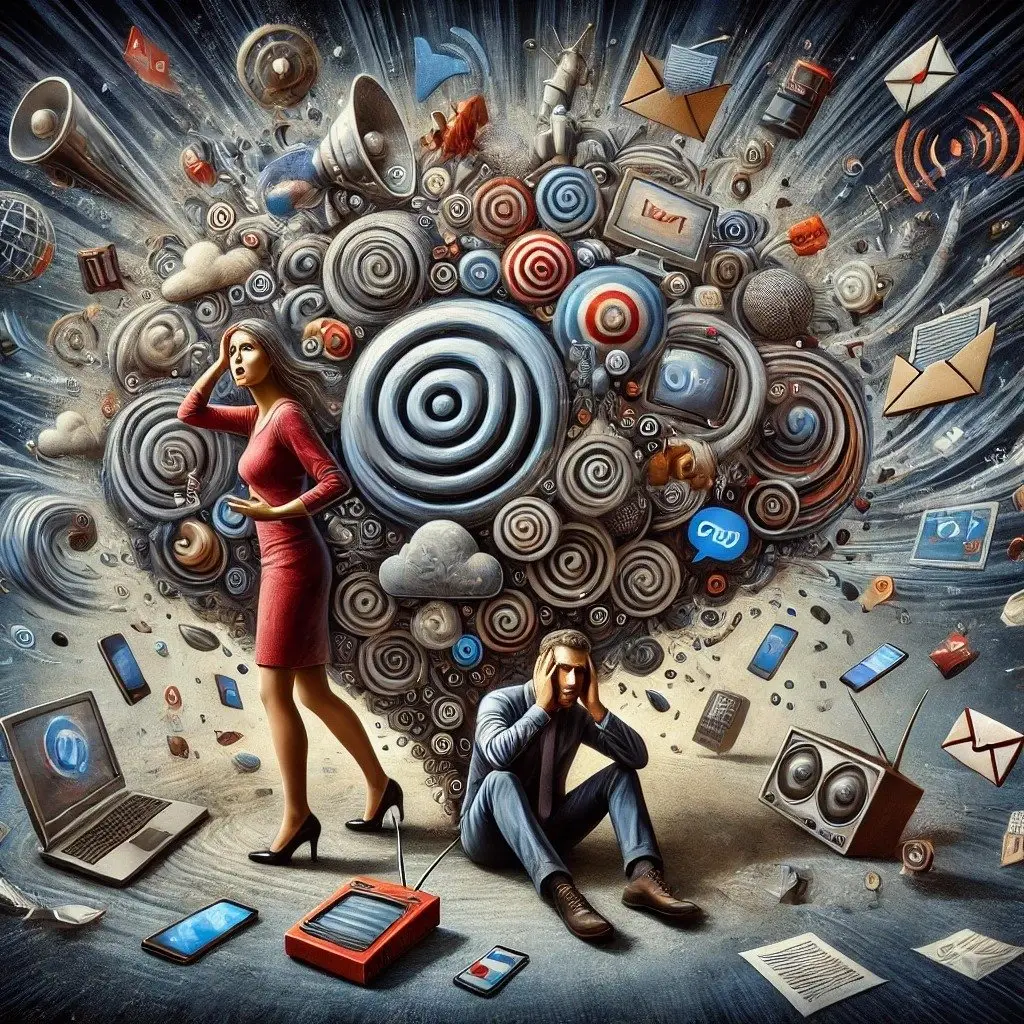
We now have access to a non-stop torrent of news and opinions. This avalanche promises unlimited knowledge but hides an omnipresent threat: information disorder. This phenomenon pollutes our information ecosystem by mixing false, manipulated, or erroneous content with verifiable facts.
Information disorder is a chameleon. It goes beyond simple “fake news” and takes three main forms: disinformation (deliberately creating false content), malinformation (manipulating real data to cause harm), and misinformation (sharing false information unintentionally). Each form distorts our perception of reality in different ways.
The roots of this problem lie in a perfect storm: digital saturation, social media algorithms that prioritize sensationalism, a crisis of trust in traditional journalism, and the “uberization of truth” where anyone can be a publisher. Furthermore, generative AI adds a new dimension by enabling the creation of convincing deepfakes and massive-scale false content at unprecedented speeds.
The impact is profound. Information disorder fragments our shared reality, fuels political polarization, and erodes trust in essential institutions like the media, the judicial system, and elections. It creates an environment where confusion thrives and informed decision-making becomes nearly impossible.
Facing this challenge requires a collective effort. While institutional action is crucial, individual citizens can arm themselves with tools like media and information literacy. Learning to evaluate sources, contrast data, and detect manipulation is the first step toward building a healthier and more reliable information environment.
We now have access to a non-stop torrent of news and opinions. This avalanche promises unlimited knowledge but hides an omnipresent threat: information disorder. This phenomenon pollutes our information ecosystem by mixing false, manipulated, or erroneous content with verifiable facts.
Information disorder is a chameleon. It goes beyond simple “fake news” and takes three main forms: disinformation (deliberately creating false content), malinformation (manipulating real data to cause harm), and misinformation (sharing false information unintentionally). Each form distorts our perception of reality in different ways.
The roots of this problem lie in a perfect storm: digital saturation, social media algorithms that prioritize sensationalism, a crisis of trust in traditional journalism, and the “uberization of truth” where anyone can be a publisher. Furthermore, generative AI adds a new dimension by enabling the creation of convincing deepfakes and massive-scale false content at unprecedented speeds.
The impact is profound. Information disorder fragments our shared reality, fuels political polarization, and erodes trust in essential institutions like the media, the judicial system, and elections. It creates an environment where confusion thrives and informed decision-making becomes nearly impossible.
Facing this challenge requires a collective effort. While institutional action is crucial, individual citizens can arm themselves with tools like media and information literacy. Learning to evaluate sources, contrast data, and detect manipulation is the first step toward building a healthier and more reliable information environment.