
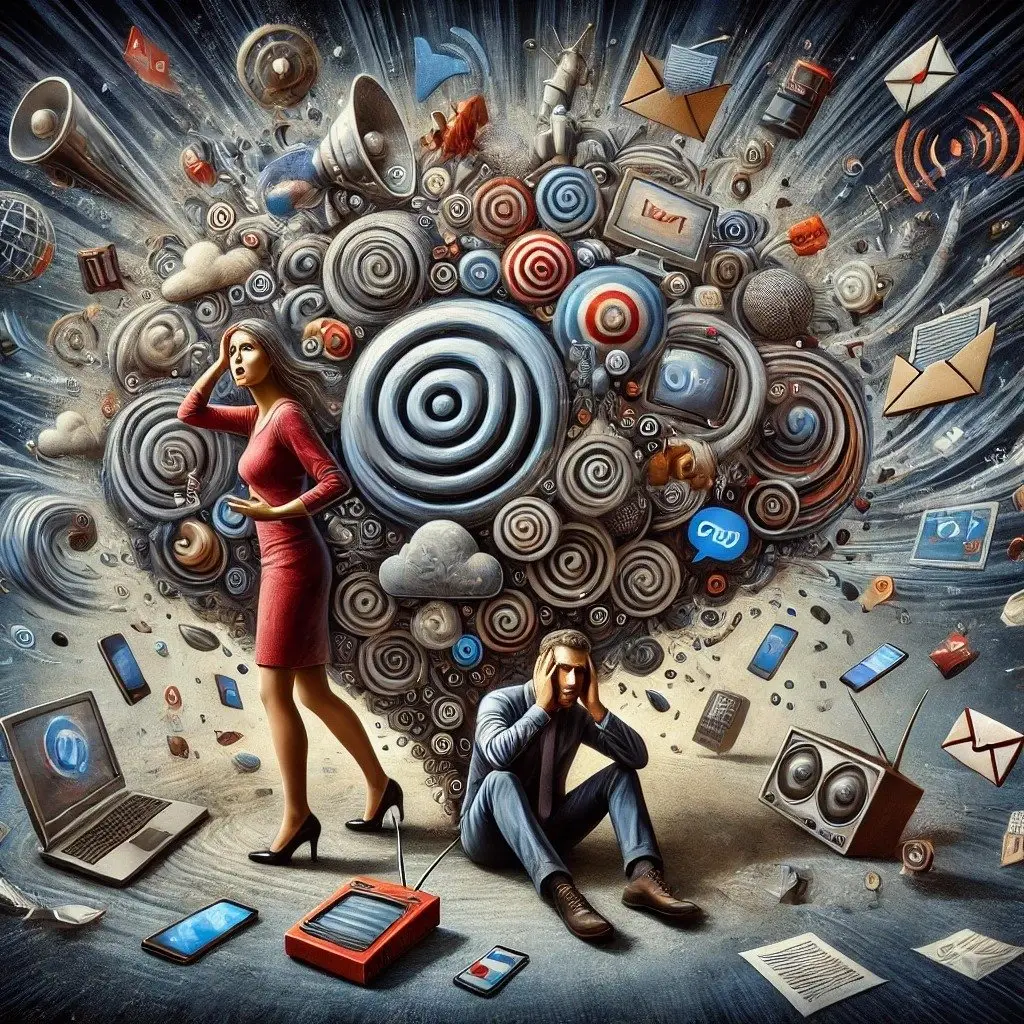
Disinformation threatens our digital rights. This article proposes an integrated approach to media and information literacy to navigate today’s information landscape.
“The migrants are eating pets in Springfield, Ohio.” “Look at Kamala Harris dressed as a communist dictator.” “The voting machines have been hacked.” The 2024 US presidential campaign confirmed that disinformation has become an effective tool for gaining power. It’s cheap and produces political benefits. Most alarmingly, these falsehoods are amplified from positions of influence.
The case of Elon Musk is emblematic. The richest man on the planet has turned X (formerly Twitter) into an amplifier of conspiracy theories, fake news, and polarizing messages that distort public debate. This reveals a troubling reality: information disorder undermines our fundamental rights in the digital environment.
Mutations of the Digital Ecosystem
According to the Digital 2024 report, every minute 44 million messages are generated on WhatsApp, 500 hours of video on YouTube, and 1.7 million pieces of content on Facebook. Traditional media have lost prominence to a system where information flows without filters. The Reuters Institute Digital News Report 2024 confirms that social media is now the main news source for most users under 35.
Unlike traditional media, which are accountable to the law and their audiences, these platforms operate without equivalent responsibility. Their algorithms prioritize engagement over truth, promoting content that maximizes interaction even if it distorts reality.
Rights at Stake
The right to communication goes beyond freedom of expression. It includes accessing verified information for effective participation in public debate. In its current dimension, this fundamental guarantee is linked to digital rights: personal data protection, online privacy, and digital security.
Artificial intelligence adds a new dimension. Language models compose persuasive texts, image generators create ultra-realistic photos, and voice cloning tools can replicate any voice. However, AI can also be an ally: new systems use machine learning to detect subtle manipulations in digital content.
A Collective Challenge
Media and Information Literacy (MIL) emerges as an essential tool for strengthening an informed and critical citizenry. Its success lies in collective application, requiring coordinated effort from the educational system, digital platforms, civil society, and media.
We need a verification culture where critical thinking is the norm. This means incorporating MIL at all educational levels, fostering intergenerational dialogue about media practices, developing regulatory frameworks that balance commercial interests with the social need for verified information, and supporting quality journalism.
From Analysis to Action
MIL proposes key questions: Who produces this information and with what interests? Why is it published at this moment? What perspectives are left out? These questions help us understand how economic interests shape narratives.
In social media, MIL offers tools to question viral content: When and where did it originate? Are there signs of technical manipulation? Who started its dissemination and for what purpose?
By understanding how algorithms determine what we see, we recognize these systems seek to capture our attention, not inform us. This awareness allows us to make more informed decisions about our digital consumption and strengthen our autonomy as citizens.
MIL is not an academic luxury but a democratic necessity. Only citizens capable of consuming information responsibly can defend their rights and contribute to a society better informed and more resilient against manipulation.
“The migrants are eating pets in Springfield, Ohio.” “Look at Kamala Harris dressed as a communist dictator.” “The voting machines have been hacked.” The 2024 US presidential campaign confirmed that disinformation has become an effective tool for gaining power. It’s cheap and produces political benefits. Most alarmingly, these falsehoods are amplified from positions of influence.
The case of Elon Musk is emblematic. The richest man on the planet has turned X (formerly Twitter) into an amplifier of conspiracy theories, fake news, and polarizing messages that distort public debate. This reveals a troubling reality: information disorder undermines our fundamental rights in the digital environment.
Mutations of the Digital Ecosystem
According to the Digital 2024 report, every minute 44 million messages are generated on WhatsApp, 500 hours of video on YouTube, and 1.7 million pieces of content on Facebook. Traditional media have lost prominence to a system where information flows without filters. The Reuters Institute Digital News Report 2024 confirms that social media is now the main news source for most users under 35.
Unlike traditional media, which are accountable to the law and their audiences, these platforms operate without equivalent responsibility. Their algorithms prioritize engagement over truth, promoting content that maximizes interaction even if it distorts reality.
Rights at Stake
The right to communication goes beyond freedom of expression. It includes accessing verified information for effective participation in public debate. In its current dimension, this fundamental guarantee is linked to digital rights: personal data protection, online privacy, and digital security.
Artificial intelligence adds a new dimension. Language models compose persuasive texts, image generators create ultra-realistic photos, and voice cloning tools can replicate any voice. However, AI can also be an ally: new systems use machine learning to detect subtle manipulations in digital content.
A Collective Challenge
Media and Information Literacy (MIL) emerges as an essential tool for strengthening an informed and critical citizenry. Its success lies in collective application, requiring coordinated effort from the educational system, digital platforms, civil society, and media.
We need a verification culture where critical thinking is the norm. This means incorporating MIL at all educational levels, fostering intergenerational dialogue about media practices, developing regulatory frameworks that balance commercial interests with the social need for verified information, and supporting quality journalism.
From Analysis to Action
MIL proposes key questions: Who produces this information and with what interests? Why is it published at this moment? What perspectives are left out? These questions help us understand how economic interests shape narratives.
In social media, MIL offers tools to question viral content: When and where did it originate? Are there signs of technical manipulation? Who started its dissemination and for what purpose?
By understanding how algorithms determine what we see, we recognize these systems seek to capture our attention, not inform us. This awareness allows us to make more informed decisions about our digital consumption and strengthen our autonomy as citizens.
MIL is not an academic luxury but a democratic necessity. Only citizens capable of consuming information responsibly can defend their rights and contribute to a society better informed and more resilient against manipulation.